Beach Safety for Beginners: Rip Currents, Flags and What to Do
The car park is hot, the ice cream van is busy, and the sea looks flat and friendly. That flat, friendly look is what catches people out. Plenty of beach rescues happen on days that look calm, to people who felt completely confident ten minutes earlier. So before the towels go down, spend two minutes reading the beach. It is the cheapest piece of safety kit you will ever own.
Start With the Lifeguards
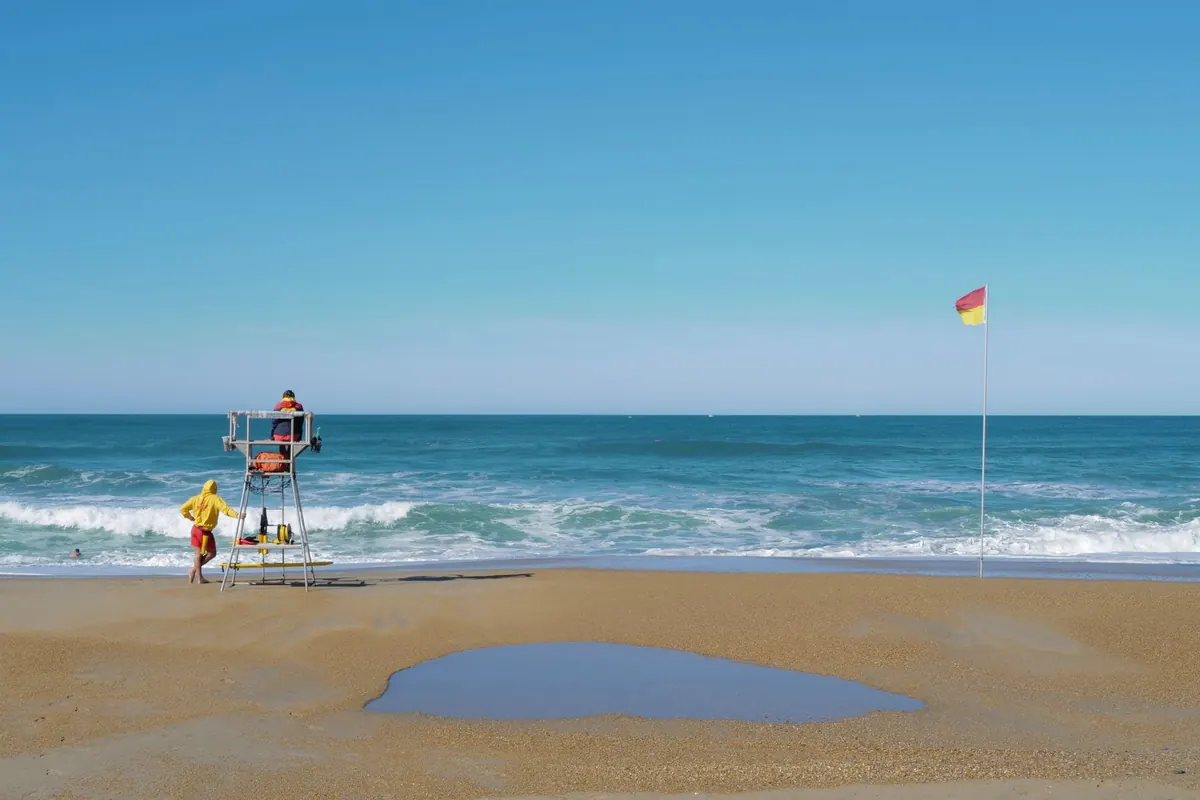
If there are lifeguards on the beach, use them. Find the hut or the tower, work out where their flags are, and swim there. It sounds obvious, but plenty of people park at one end of a bay, walk a mile, and end up swimming somewhere nobody is watching.
If the beach has no lifeguard cover, you are making your own judgement. That is fine on a gentle day in a sheltered bay where you can stand up. It is not fine when there is a swell running, an offshore wind, or a steep drop-off just past the shallows. Check local signage for tide times and warnings, and ask in a nearby café or shop if you are unsure.
Reading the Beach Before You Get In
Do a proper look, not a glance. Four things, in this order:
- Where will you swim? Between the flags, or in water shallow enough to stand up in.
- Where would you get out? Pick a landmark behind the beach — a café, a groyne, a set of steps — so you can find your spot again if you drift.
- What is the water doing? Bigger sets of waves, a current pulling along the shore, a tide that is racing out.
- What is the wind doing? An offshore wind, blowing from the land out to sea, is the one that causes the most trouble, especially with inflatables.
Watch for a couple of minutes. Anything moving sideways along the beach, or steadily out to sea, is worth noticing.
The Flags, Decoded
Flags are a system, not decoration. Learn these five and you can read almost any lifeguarded beach in the UK.
- Red and yellow flags: the patrolled zone. This is where you swim and bodyboard when lifeguards are on duty. Nothing else on this list is a swimming area.
- Black and white flags: for surfboards, kayaks and paddleboards, not for swimmers. Bobbing about in this zone puts you in the path of something heavy moving fast.
- Red flag: do not enter the water. Not for a paddle, not for a quick dip. The lifeguards have judged the conditions dangerous, and they are better at this than you are.
- Orange windsock: offshore wind. No inflatables, no paddleboards, no lilos. Stay close to shore and think hard about whether you need to be in the water at all.
- No flags, no lifeguards: there is no patrolled zone and nobody watching. Plan around that rather than treating it as a green light.
What a Rip Current Actually Is
All the water that waves push up the beach has to go somewhere. It drains back out through the easiest route available, often a gap between sandbanks or alongside a groyne. The result is a current running out to sea: narrow enough that you might miss it from the sand, strong enough to take you off your feet.
A rip will not pull you under. It pulls you out, and it usually runs hardest near the beach before easing a little way offshore. That detail matters enormously for what you do next.
These are the signs to look for:
- A channel of darker, flatter water between lines of white breaking waves.
- Foam, seaweed or debris drifting steadily out to sea.
- Choppy, churned water in an otherwise even stretch of surf.
- A gap where the waves are not breaking as much as they are either side.
That last one is the trap. The calm-looking gap often looks like the safest place to swim. It is frequently the most dangerous.
If You Get Caught in One
It will feel alarming, and your instinct will tell you to swim hard at the beach. Do not listen to it.
- Float first. Stop fighting the current and let it carry you while you get your breathing under control. Rips run out, then fade.
- Signal. Raise one arm above your head and shout. Save your voice for the people on the beach.
- Move sideways. Swim parallel to the shore to get out of the channel, then head in at an angle where the current has eased and the waves are helping you.
- If you cannot swim well, keep floating. Let it take you out, keep signalling, and wait for help. Thrashing about is what exhausts people, not the current itself.
Swimming sideways when the beach is behind you feels entirely wrong. Do it anyway.
Simple Rules That Keep You Out of Trouble
- Swim between the flags, or stay out.
- Never swim alone, and keep children within arm's reach. In sight is not close enough.
- Leave inflatables at home. They catch the wind and drift faster than anyone can swim.
- Enter the water slowly, especially when it is cold. Cold water shock is real. If you have a heart condition, epilepsy, are pregnant or have any other health concern, speak to your GP before cold water swimming.
- Skip the swim if you have been drinking.
- Check the tide. Some beaches cut off walkers, and some bays shrink to nothing as the water comes in.
- If you are unsure, stay in the shallows where you can stand up.
If Someone Else Is in Trouble
Going in to help is how would-be rescuers get into trouble themselves. Shout for the lifeguards, or dial 999 or 112 and ask for the coastguard. Throw them anything that floats — a ring, a ball, a cool box — and keep your eyes fixed on them. From the beach you are the best marker the rescue services have, so stay put and point.
Two Minutes Before Every Swim
Find the flags. Note your exit landmark. Check the wind and the tide. Watch the water for a rip. Then decide whether you are actually going in.
The sea is the best part of a British summer: cold, bracing, occasionally glorious. Treat it with a bit of respect and it stays that way.
Photo: Thierry GauquelIn / Pexels


You Might Also Like
A worked two-day plan for an autumn or spring weekend on the Pembrokeshire coast, pairing a cliff walk with a sheltered paddle and a campsite base — plus what to book first.
Sand, salt and a steady onshore breeze wreck kit lists built for woodland sites. Here are the fifteen things coastal first-timers most often leave at home.