Sea Kayak or Stand-Up Paddleboard? Choosing for Your Coastline
Sea Kayak or Stand-Up Paddleboard? Choosing for Your Coastline
On a calm morning in a sheltered estuary, a sea kayak and a stand-up paddleboard look like two versions of the same good idea. Both float, both paddle, both get you closer to a rockpool than any footpath. Then the tide turns and the wind arrives, and they become very different machines: one is built to carry you and your kit through weather, the other to keep you on the surface, close to shore, right in the middle of things.
Neither is better. What matters is which one suits the water you actually paddle and the days you actually get out.
What each craft is genuinely good at
A sea kayak sits low and long. It tracks straight without constant correction, so your energy goes into travelling rather than steering. Bulkheads and hatches keep kit dry and keep the boat buoyant if a compartment floods, and a sprayskirt lets you take a little chop over the deck and keep going. Sit-on-top kayaks give up some speed and shelter but are far easier to climb back onto after a swim.
A paddleboard gives you height. Standing, you see over the glare and into the water — the reef, the seal, the channel between the sandbar and the rocks. Inflatables pack into a bag, travel on a bus, and forgive a clumsy fall; rigid boards feel faster and track better but need storage and a roof rack. A board is also a wonderful platform for snorkelling, yoga, or photography, because you can sit, kneel, or lie on it as easily as you stand. The trade-off is exposure: you are a bigger target for wind, and every mile costs more effort than it would in a kayak.
Where you paddle decides more than the craft
Before you compare hulls, compare coastlines. A kayak and a paddleboard can both handle a gentle bay, but the match changes as soon as the water does.
Sheltered estuaries, harbours, and calm bays
This is shared ground. A paddleboard is often the more fun choice here: the water is flat, the shore is close, and the pleasure comes from standing, looking down, and drifting quietly. A kayak still wins if you want to cover distance, carry a picnic, or paddle for three hours without your feet going numb. On a small estuary, either works, so choose the one that makes you smile.
Exposed coast, crossings, and open water
This is kayak country. Wind, swell, reflected waves, and long stretches between landing spots reward a low profile, a sprayskirt, and the ability to keep moving in a straight line. A paddleboard can be used in open water by skilled paddlers, but it is slower, wetter, and far more tiring when the wind picks up. If your dream is a point-to-point journey along a rugged coast, a sea kayak is the safer and more realistic tool.
Surf zones and rock gardens
Both can play here, but they play differently. A kayak lets you punch out through surf, ride a wave, and roll if you capsize. A paddleboard is brilliant for catching small waves and for the immediacy of turning and looking back at the beach. In rocky places, a board's leash can snag, so think carefully; in a kayak, a helmet and a reliable roll matter more than speed.
The day you actually get out
Most paddlers do not choose between a kayak and a board in the abstract. They choose on a Tuesday evening after work, or on a Saturday morning when the wind is already building. That real day is the one to plan for.
If your typical session is ninety minutes, launched from a beach car park, close to shore, a paddleboard is hard to beat. You inflate it, walk it to the water, and you are standing within minutes. If your typical session is a half-day or a full day, with a destination, a lunch stop, and a chance of rain, a kayak starts to make more sense. It carries water, food, dry layers, and a camera without turning into a balancing act.
Ask yourself:
- How long will I be out? Under two hours favours a board; over three favours a kayak.
- How far from shore will I go? Close to shore favours a board; crossings favour a kayak.
- What will the wind do? Onshore breeze and chop favour a kayak; light offshore mornings favour a board.
- What do I want to carry? A thermos and a towel suit a board; camping kit suits a kayak.
Skills, safety, and the learning curve
Both crafts demand respect for cold water, tides, and weather. The difference is in what you practise.
In a kayak, learn a wet exit, an assisted rescue, and ideally a roll. Practise bracing into waves and edging the boat. A sprayskirt is not a barrier to safety if you can get out of it quickly; it is a piece of clothing that keeps the sea outside.
On a paddleboard, learn to fall away from the board, remount from deep water, and paddle in a kneeling position when the wind rises. A leash is essential in the surf and often useful in flat water, but it must be the right type for the environment. A PFD is not optional in either craft, and neither is a way to call for help.
The best craft is the one that matches your most common day, not your dream day. A kayak you paddle weekly beats a board you admire on the wall.
Kit and logistics: what you can carry
Sea kayaks are cargo ships. Hatches swallow tents, sleeping bags, stoves, and fresh water. Deck lines hold a paddle float, a map, and a spare layer. That capacity turns a paddle into an expedition. Paddleboards are more like open trucks: you can strap a dry bag to the deck, but weight high on the board makes it tippy. Inflatables have another advantage, though — they fit in a car boot, a train, or a small flat, which means they get used more often.
Think about the whole trip, not just the water. Where will you park? Can you carry the craft alone? Is there a hose to rinse it? A heavy rigid board that needs two people to roof-rack may stay home on the days you have an hour to spare.
A simple decision framework
- Write down your last five paddling days: where, how long, and with whom.
- Mark the conditions: wind, swell, tide, and distance from shore.
- Choose the craft that would have made those five days easier or more enjoyable.
- Rent or borrow that craft for a month before buying.
- Take a lesson in rescue and technique, whichever you choose.
Try both, then commit
Many coastal paddlers end up owning one of each, but that is not a failure of decision-making — it is a sign that different days ask different things. A kayak for the long, exposed journey; a paddleboard for the warm, shallow afternoon. If you can only choose one, let your coastline and your calendar vote. The sea does not care which you pick. It only cares that you read the forecast, wear your PFD, and come back with a story worth telling.
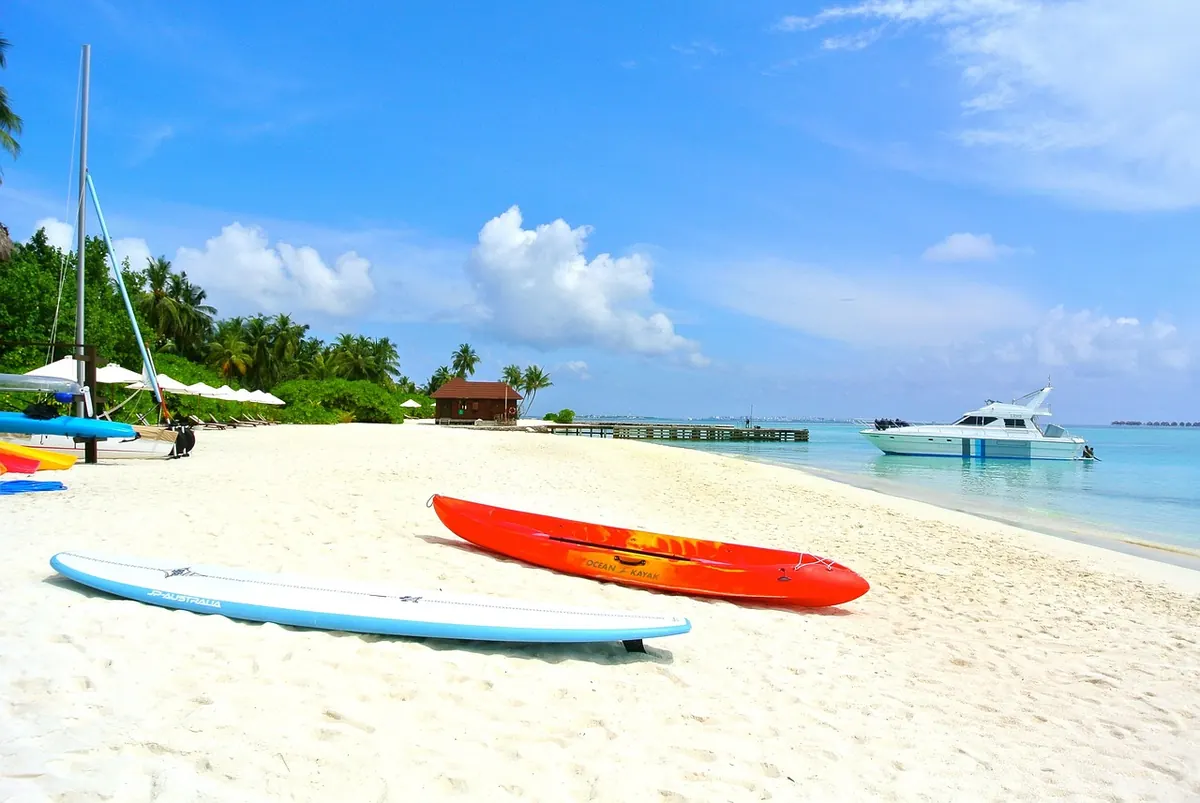
Photo: FonthipWard / Pixabay

You Might Also Like
A worked two-day plan for an autumn or spring weekend on the Pembrokeshire coast, pairing a cliff walk with a sheltered paddle and a campsite base — plus what to book first.
Sand, salt and a steady onshore breeze wreck kit lists built for woodland sites. Here are the fifteen things coastal first-timers most often leave at home.